

Fully Automatic
- SUNAIROBOT
- Products
- Fully Automatic
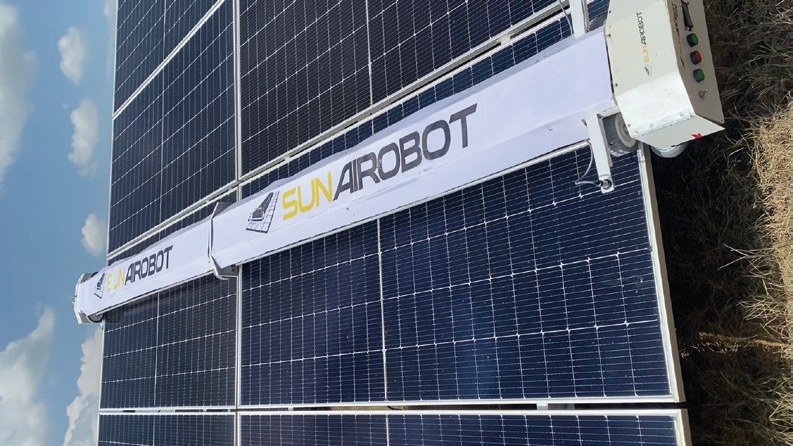
 Autonomous
Fully Automatic
Scheduled autonomous fleets with telemetry for utility-scale tables.
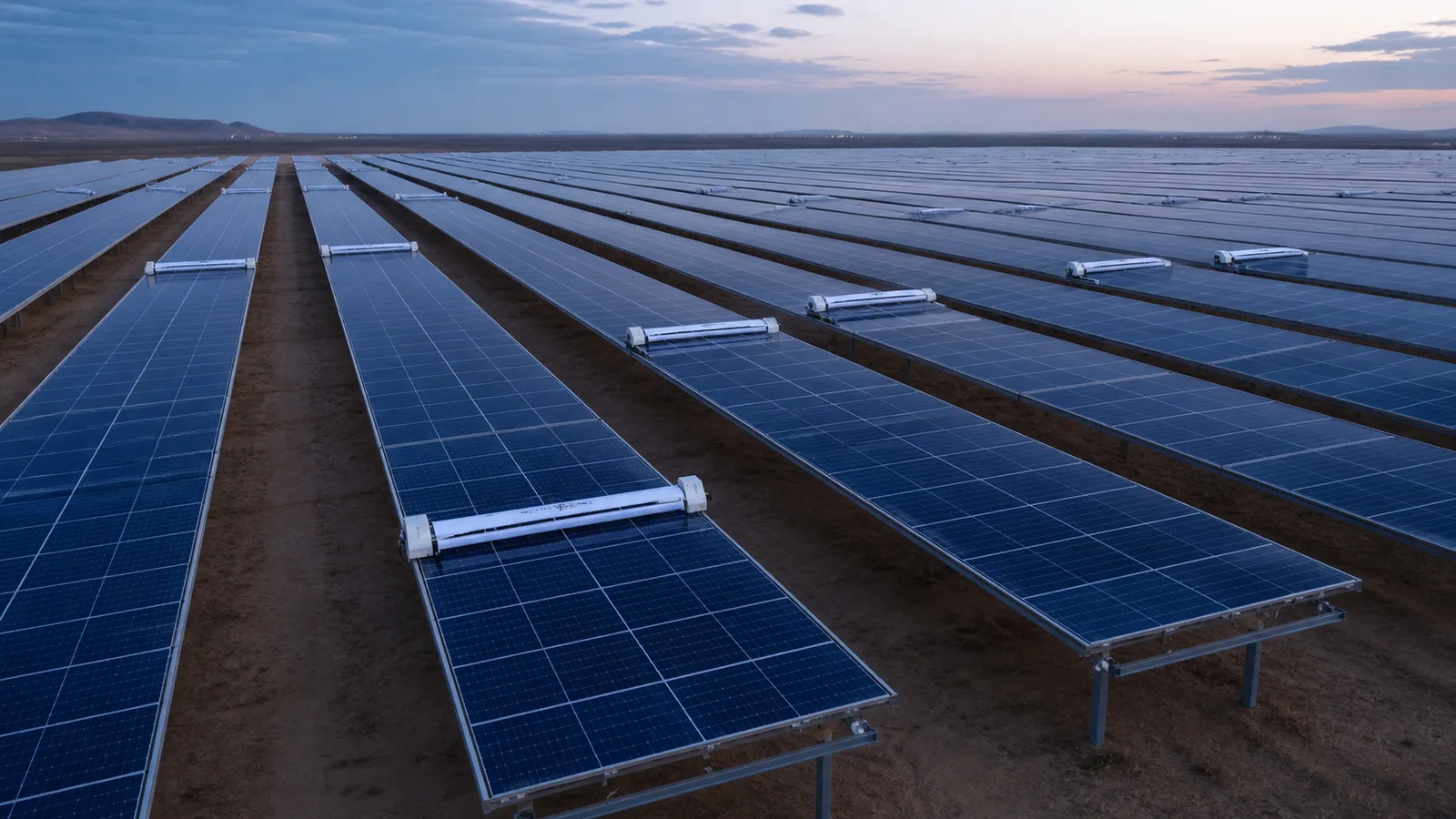
The SUNAIROBOT Fully Automatic robot is built for utility-scale solar farms that need scheduled cleaning and fleet telemetry — without a crew walking every table.
Autonomous scheduling runs overnight or off-peak windows. Telemetry shows cycles completed, coverage, and machine health so plant managers keep soiling losses visible across 50 MW to 120 MW+ sites. Waterless dry-clean is the default in arid operating conditions.
Overview
What it is, where it fits,
what problem it solves
Best for: Utility-scale solar farms.
Key Benefits
Why O&M teams pick
Fully Automatic
Autonomous scheduling
Run nights or off-peak windows without walking every row.
Fleet telemetry
Cycles, coverage, and machine health visible to O&M.
Waterless dry-clean
Default mode for arid, water-constrained parks.
Labour per MW down
Crews supervise exceptions, not every brush pass.
Utility table lengths
Sized for long ground-mount and tracker rows.
Yield the model assumed
Keep financed generation from being eaten by dust.
Technical Specifications
Working data for site sizing
| Model | SR-01 — Fully Automatic (autonomous) |
|---|---|
| Communication | LoRa / LoRaWAN module |
| Monitoring | SCADA — centralized monitoring system |
| Cleaning speed | Up to 20 m/min |
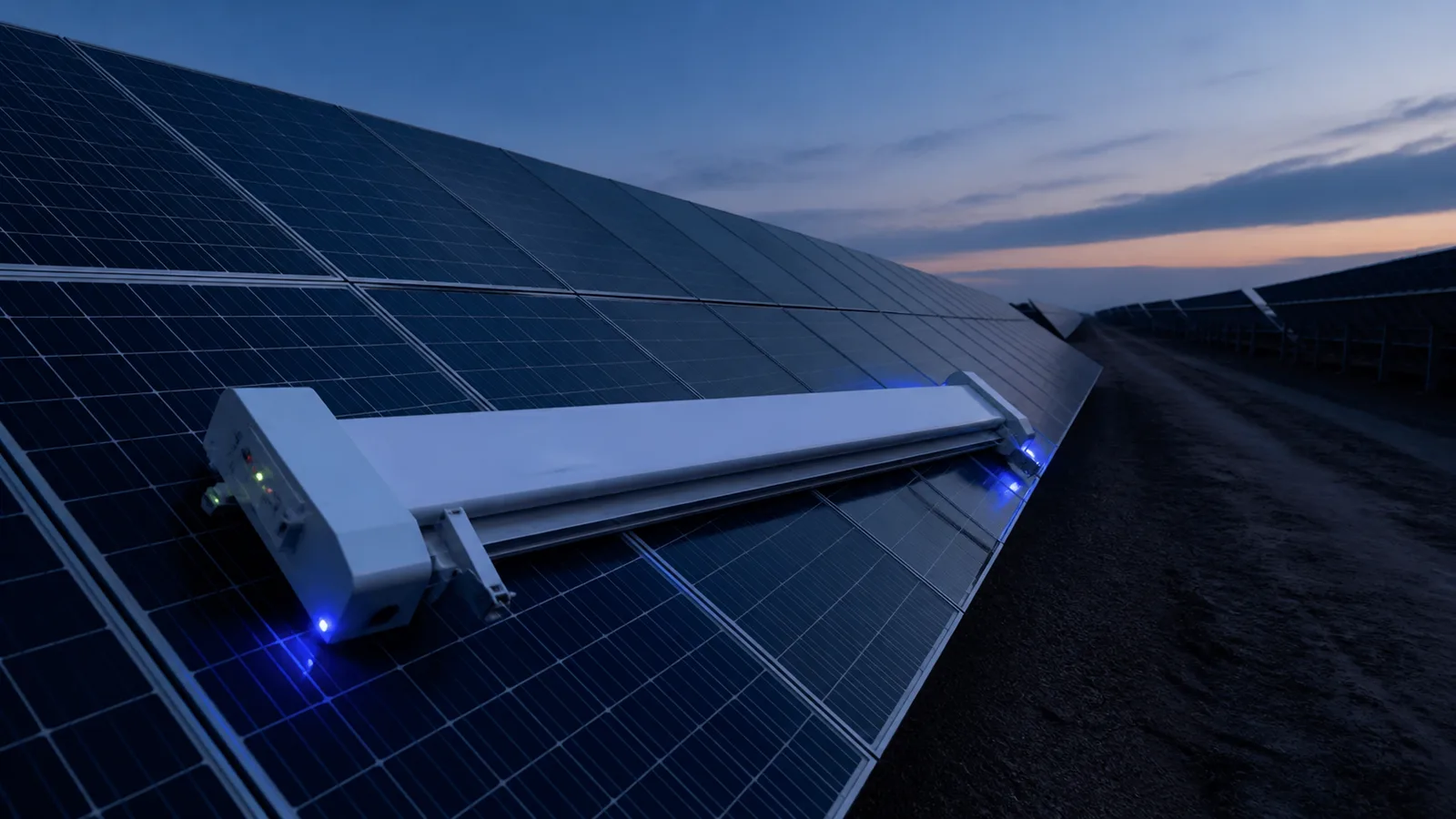
| Cleaning method | Dry brush (waterless) + screw mechanism |
| Brush | Soft PBT brush |
| Motor | PMDC · 3000 RPM · 120 W · 6.67 A |
| Drive | High-torque geared motor · 6-wheel drive · 24 VDC |
| Battery | LiFePO₄ · 29.5 VDC · 18 Ah · ~3.3 h run time |
| Charging | 29.5 VDC · 5–9 A · ~3.5 h |
| Protection | Robot IP65 / Motor IP54 |
| Weight | < 47 kg |
| Safety | 2 / 4 proximity sensors |
| Install angle | Up to 30° tilt |
| Operating temp | −10 °C to +60 °C |
| Application | Rooftop & ground-mounted plants |
Final names, drawings, and certified specs follow client Drive/brochure assets. Values here are working labels for site fit — not a substitute for an approved datasheet.
How It Works
From survey to cleaning cadence


1. Survey at park scale
Table length, tracker type, soiling, and SCADA/O&M workflow decide fleet size.

2. Commission the fleet
Install, map rows, and train the control room / field team.

3. Schedule autonomous runs
Night or off-peak windows keep generation hours clear.
4. Watch telemetry
Confirm cycles and coverage. Exceptions go to field service, not ad-hoc mopping.
Best For / Applications
Where Fully Automatic belongs
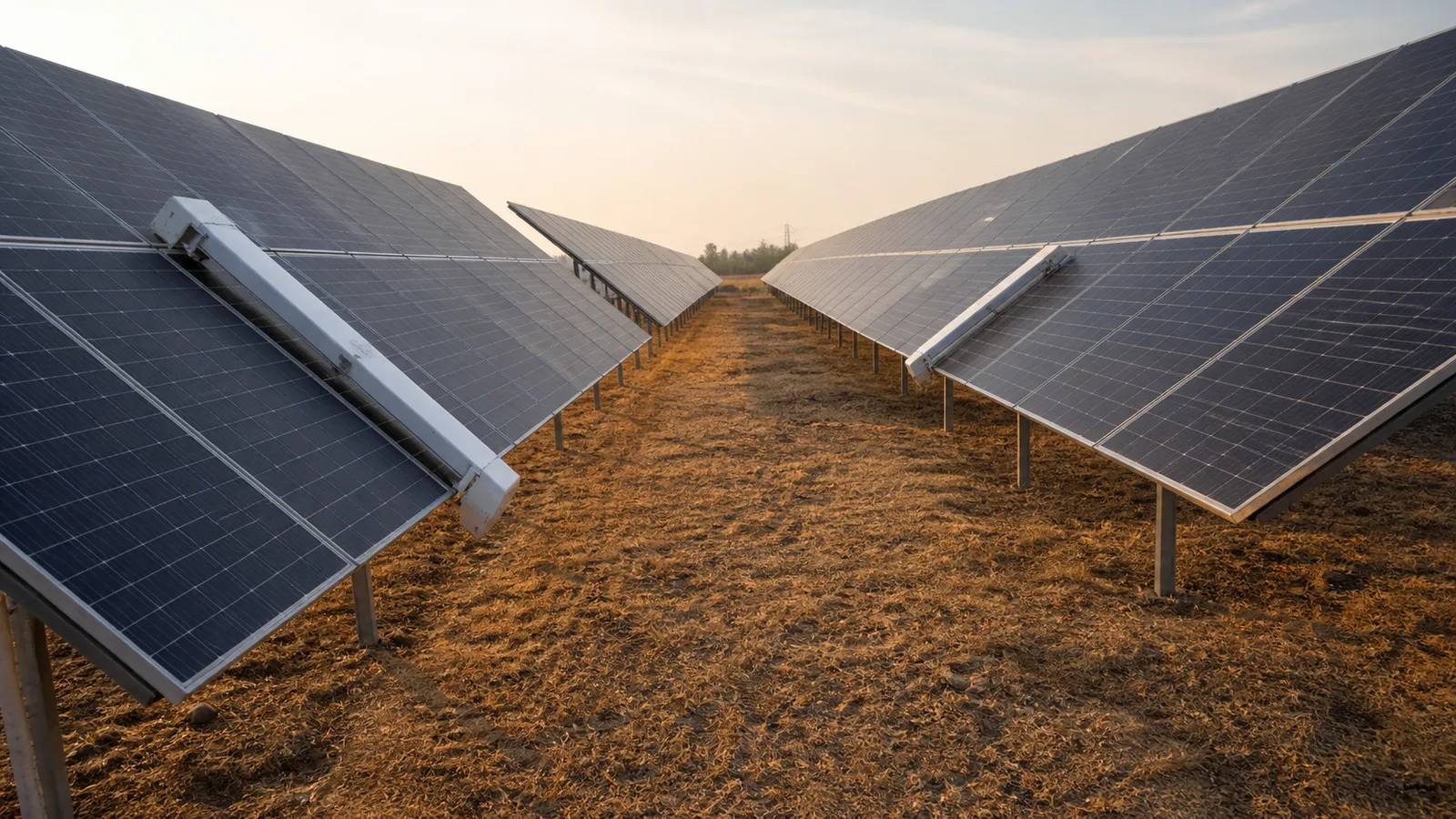
- Utility-scale ground-mount parks
- Long tracker or fixed-tilt tables
- Arid, water-limited operating environments
- O&M teams that need cycle-level visibility
Gallery
Product and operating views
Related Projects
Fully Automatic in the field
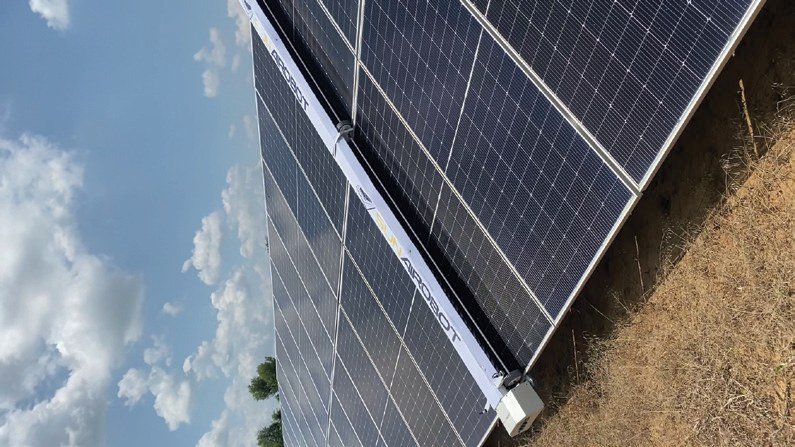
Fully Automatic
Rajasthan · 50 MW
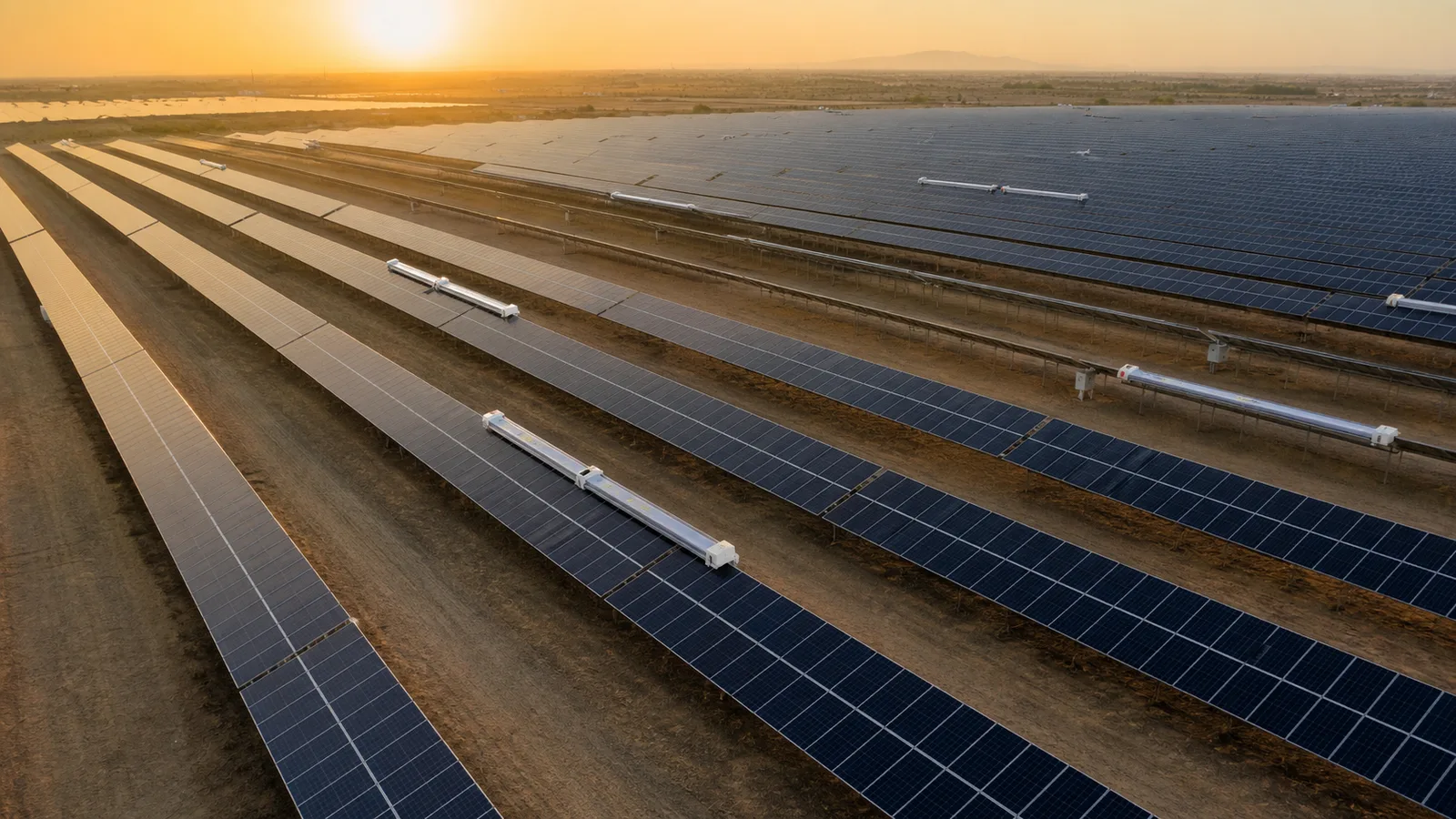
Fully Automatic
Rajasthan · 120 MW
Downloads
Brochure and spec sheet
Approved PDF datasheets and manuals ship with the client Drive pack. Until those files are published, request the Fully Automatic spec sheet with your site MW and we will send the current pack.
FAQ
Fully Automatic questions
Will it run without an operator on every table?
Yes — that is the point of Fully Automatic. O&M still commissions, schedules, and handles exceptions.
Does it need water?
Default is waterless dry-clean. Wet is only where the site and module type require it.
Can we see cleaning history?
Fleet telemetry reports cycles and coverage. Deeper SCADA hooks follow the approved integration for that plant.
How do we demo?
Share park MW, location, and tracker type. We size a Fully Automatic fleet vs Semi-Automatic.